
like your art too and i have seen a SWOT since business class lol
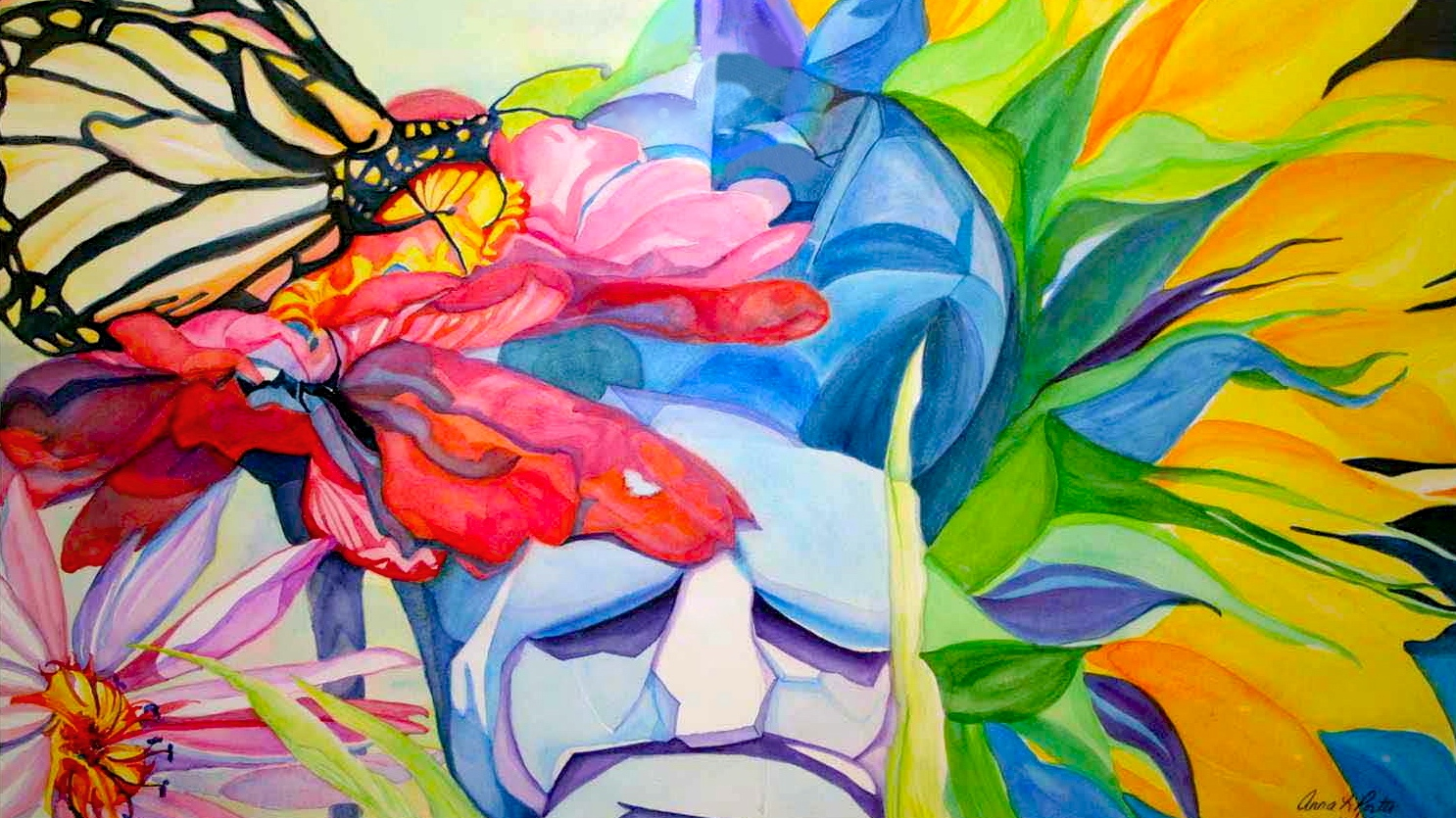

fiji dreams, 2003, watercolor, copyright 2013 annaporterartist

Recently my partner, George Porter, the Managing Director of Lake Oswego Consulting Group shared a few tips on what it takes to sell art. I have been getting a fair amount of feedback on my blog post, Advice for a Newbie, Revised, that was syndicated by Fine Art Studios Online and published in their Fine Art Views Blog on 2013-07-15. Some of it is from artists who seem to be confused about the difference between selling art and marketing art. And you can substitute the word “art” with “product of your choice”. Here, in his very succinct and tongue-in-cheek fashion, are the Five Essential Elements Necessary to Sell Art (or anything else), according to George Porter:
1. a piece of beautiful and/or interesting art that is well crafted;
2. a qualified buyer who is interested in buying your art;
3. an enthusiastic presentation, preferably by you, the artist; or by your artist sales representative, art dealer or art gallery;
4. a question: Do you want to buy this piece of art?
5. a price and payment method that is mutually agreeable.
If you are missing any one of these five essential elements, George would say that a sale is not going to happen, period. I would say that if you are missing any one of these five essential elements, unless you are extremely lucky, a sale is not going to happen, period. Every once in a while the art angels smile down on us and a miracle happens. But miracles are not something that consistently put food on the table. Creating and selling your art can.
So that is it. It is as simple (and as challenging) as that. Our job as artists is to:
Create and produce beautiful and/or interesting art (and I would add unique if you want a better chance at success) that is well crafted;
Put our art in front of qualified art buyers who like our art;
Present our art enthusiastically or hire someone to do that for us;
Ask for the sale or hire someone to do that for us;
Set a fair price and provide a variety of easy payment options so buyers can buy our beautiful piece of art RIGHT NOW!
 So why do we, as artists, have such a hard time with this? We spend countless thousands of dollars getting art degrees, attending workshops, joining artist societies and taking classes to improve our craftsmanship, so one would think that we must have Item 1 pretty much nailed.
Surely we, as artists, we love our art and are proud of our work, so we should be able to handle Item 3 and present our art enthusiastically and not require someone to do that for us … if not, I would be asking myself the question, why not? And figuring out how to solve that problem.
 Are the words Do you want to buy this piece of art? in Item 4, really that difficult to utter? And yet there are so many of us who freeze at the thought. There are even some artist societies and online artist groups who try to make it sound evil to even be trying to sell your art, if you are a member of their society or in their group. Those societies and groups you want to avoid, if making a living as an artist is as important to you as creating your art.
We are frequently willing to give away one half of our income or more, because that one question terrifies us so. I ask you, what is the worst that can happen? Your suspect says Nope, not interested. Okay so MAYBE this is not the time for this buyer at this moment. It does not mean that you are a bad artist, or that this person will never be interested in your art, or even that this person is not interested in your art right now.
 Have you ever gone into a restaurant not really sure what you wanted, and at first nothing seemed to interest you? Then the server comes to your table and tells you a little bit about the dishes and the specials, mentions the wonderful fresh ingredients, and maybe gives you a glimmer of how the chef uses his culinary wizardry to create it. And then your server comments on how many people have ordered the dish and told him or her how great it tastes. Suddenly your appetite is whetted. It’s not any different with selling art, or selling anything else for that matter. As long as you are telling the truth and you believe it. If every dish on the menu is a disaster and the server tells you how great it is and how much everyone loves it, well then you, the server and the restaurant have a big problem. It is time to leave our insecurities behind. Hunger makes the bravest souls out of the most timid of men and women.
A little market research on Google can tell you what art is going for in any market in the world, so setting a fair price should not be an issue. You might not like that price, or think that it is high enough, but if that is all that people are willing to pay in that market at that time ...
you can sell elsewhere; you can try again later; or you can adjust your expectations accordingly. There are things that you can do to increase the perceived value of your art, and you should never sell your art at a loss; because you cannot make up a loss on every piece of art with volume. However, fair market price is the overriding factor. If you are not internet friendly, or you don't have a computer, then go to some local art fairs and galleries to get an idea. With the ability to take payment by credit card, debit card and paypal on your hand-held mobile device, inflexible payment issues are a thing of the past. So cross off Item 5.
So the real stumbling block then must be Item 2 - finding qualified art buyers who like your art. I ask you this:
 How many homes are there in America or insert “country of your choice”? What do they have on the walls?
How many people buy vacation homes? What is on their walls?
How many people travel to new places and want a souvenir of their blissful vacation to take back home with them?
How many new businesses start up every day in your town, city, or state? What is on their walls?
How many new restaurants start up and need some great ambiance to make customers want to stay and order more food and alcohol? What is on their walls?
What about those government buildings like the post office and DMV, where you have to stand in line for interminable hours and would give anything to be able to look at something besides the the long line and grey walls?

There are qualified art buyers everywhere. You just need to put yourself and your art in front of them, be friendly and enthusiastic about your art, and ask that magical question. Over and over again.
We all want to succumb to the idea that if we simply post it online, they will come … Sadly it just doesn’t work that way. Not unless you and your art are already known and already famous. And even then, the general public has a very short memory.

Do you need a website or online gallery or physical gallery? Yes, unless you want to be constantly knocking on doors with your portfolio in tow, something that generally sets fear into the hearts of every artist that I have ever met, and takes up virtually all of your time. You need a place that you can tell your qualified prospects, and your customers can tell their friends and business associates, to go to look at your art and keep up with your recent creations. Some place professional and friendly. And search engine optimized, or located in a part of town with lots of foot traffic and nice big front windows. And easy to find and navigate. Where there is always someone available to present your art enthusiastically and ask the all important question, Do you want to buy this piece of art? One that takes cash, debit cards, credit cards, paypal, travellers checks, money orders - any and all forms of cash and cash-like substitutes.
Can a good website or online gallery replace a traditional gallery or art fair or art show? Honestly, probably not. Because walls don’t sell art. People sell art. People buy fine art from people - from artists, artist sales representatives, art dealers and art galleries that they know, like and trust.
But can a good website, online or traditional gallery help your marketing and your sales? Definitely, yes. In this digital age, you need a strong marketing presence. Like it or not. People want to buy art from successful artists. Having a website and a gallery, shows that you are serious about your work and others are serious about it too - serious enough to bet their livelihood on it.

Do you need social media? It’s free, there are a lot of people on it at any given moment. Use it and your time wisely. Because it can be a giant sucking hole in terms of time. Have you ever seen the movie, “The Money Pit”? It is a hilarious comedy that shows how a fixer upper can become a giant sucking hole for your finances. Same thing with social media for your time. Just because it is free doesn’t mean it isn’t costly. The most valuable resource you have as an artist is your time, because YOU have to create the products that YOU sell. So use it wisely. Your time is best spent creating and selling your art.
A few regular social media posts linked to your website can do a world of good for your “known” factor, but you won’t necessarily be getting known by qualified art buyers. Facebook, Pinterest, Twitter, Instagram and LinkedIn are great at creating likes and follows and shares on Facebook, Pinterest, Twitter, Instagram and LinkedIn. But as have all discovered, a like on Facebook does not equal an art sale. Facebook and many other social media sites do; however, have great prospecting tools built right into them, that you can use to get your messages out to a targeted list of possible buyers. You just have to know where to look and how to use them.
 If your biggest problem is that your art is not selling, the first question you need to ask is who is selling my art? If the answer is no one, that’s where you need to begin. If the answer is someone, or some gallery, or yourself, then you need to ask what am I, or they doing that is not working? Which of the five essential elements am I, or they, missing?
Trying to make a living as an artist means that you are in business for yourself. And as any small business owner can tell you, it takes a tremendous amount of effort to do a start-up. For every success, frequently there are two or more failures that came before it. But if an artist is who you are, and not just what you do, then I think it is worth the effort.

For more information on how to create a sound, realistic and achievable artist business and marketing plan, check out Lake Oswego Consulting Group’s Marketing Your Art Workshops, created by artists for artists. And yes, this is a shameless plug for one half of what puts food on my table. In addition to creating and selling art as Anna Porter Artist, I am also the Marketing Director for Lake Oswego Consulting Group.
In future blog posts, we will take a look at the difference between sales and marketing and why both are important to us, as artists - if we want to make a living creating our art.
Enjoy the journey!
Anna Porter

Anna Porter Artist
Fine Art and Digital Photography
(503) 697-7666
http://instacanv.as/annaporterartist
 Anna Porter
Marketing Director
Lake Oswego Consulting Group
(503) 360-7260
http://lakeoswegoconsultinggroup.com
* required


