
Thank you so much for all the good tips you provided!
I will be finding a Marketing Art Class soon.
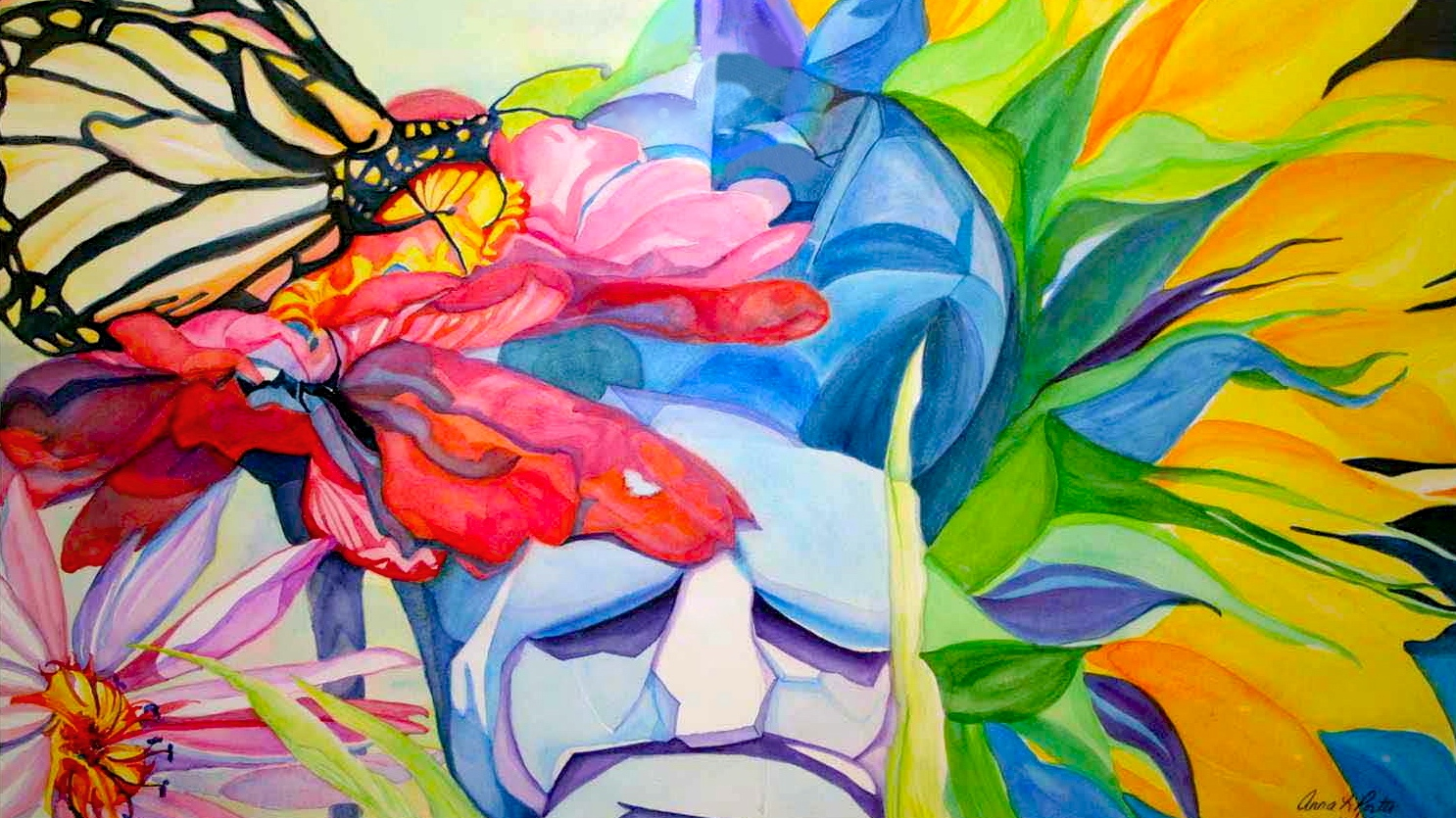

portrait of a baby bird, 2005, watercolor and gouache on cold press paper
Recently I posted an entry to a question posed by a fellow artist in a LinkedIn Group that I belong to called Painters in Watermedia. In “Advice for a Newbie”, the new group member stated that she was new at art and had started her art career later in life. She was wondering if there was any advice that group members could share with her with regard to establishing her newfound career in art. This was my reply: (note: italicized text contains additional pearls of wisdom that were not part of my original reply. They are new as of this blog posting)
“I began painting at the age of 37 in art therapy. At the age of 46, I returned to college part-time to take transfer classes towards a Bachelor of Fine Arts Degree. Like you, I started late. I have never stopped painting. My career as an artist has been very unconventional and definitely full of twists and turns. The best advice that I can give is:
1. Take classes whenever and wherever you can, as you can afford them. If it interests you, do it.
2. If you cannot afford classes or workshops, think about starting a “painting” or “drawing” or “insert your art type here” group. Like a book club, but for artists instead of readers. Get together to paint or do whatever en plein aire in local parks when the weather is nice. Being around other artists and creative people inspires your creativity and your growth.
3. Always work on improving your craftsmanship.
4. Always work on increasing your “known” factor.
5. Establish a website or online gallery and start an art blog. Link the art blog to your website or online gallery.
6. Use social media effectively to promote your art for free. Link your social media sites to your website.
7. Stay in touch with your customers and your prospects with an email newsletter. Include links to your website and social media in your newsletter.
8. Galleries want to know that an artist is current and consistent. They need to know that they can count on a steady and consistent supply of art from you. Start good habits now, so that you paint, draw, or do whatever you do, every day, no matter what.
9. Look for non-conventional places to show your art - restaurants, cafes, bars, government offices, schools, corporations are a good place to start.
10. Check online for Call for Artists and Call for Entries in your local area. New restaurants will frequently post notices on Craigslist.
11. Submit at least one piece of art every month, if you can, to an art show or art contest. Art Magazines, like The Artist's Magazine, are a good place to look for art contests, call for artists, art fairs, art shows, workshops, technique tips, etc.
12. Visit galleries and get to know the owners and the type of art and artists they represent. When you find one that fits you, make sure that they are good at what they are supposed to be good at - marketing and selling art. Visit the gallery at least three times on different days and at different times to make sure that it:
a. is reponsive and attentive to customers;
b. is knowledgeable and honest about the art that it is trying to sell;
c. is open at convenient times when there are lots of people in your target audience available to shop;
d. has good foot traffic, signage, parking etc. (all the things that are important for any retail business);
e. is pleasant, courteous and respectful to customers, to the artists they represent, and to you as a prospective artist;
f. accepts multiple forms of payment;
g. has been in business for at least two to five years (like a restaurant, the first two years are the make it or break it years);
h. is well-liked and well-known in the community (if it can market itself well, then odds are it can market your art);
i. has a strong online presence for the gallery, and will link to your artist website;
j. ideally, can accept orders and payments online, in addition to in person at the gallery;
k. has an established dealer network in other geographical locations;
l. offers a commission plan that is acceptable to you, and that includes marketing expenses
(i.e. the gallery pays for posters, postcards, announcements, press releases etc. for your shows at their gallery);
m. does not place restrictions on how else you market yourself and your art
(i.e. online, at art fairs, with artist representatives, or at art galleries in other geographical areas).
Ask the gallery owner or representative how they prefer that you submit your work for consideration, and follow their directions. Before you sign a contract with anyone, ask a lawyer to take a look at it to make sure that you know exactly what you are getting and not getting. It is worth the legal cost to protect your art and yourself. Don't skimp on the important stuff.
13. Think about different ways that you can diversify your product, so that you can have “something for everyone”. A few ideas to get you started:
* If you are a painter, create tiny paintings, as well as large paintings;
* If you are a painter, create fine art giclées from your original paintings;
* If you are a painter and you paint from photographs, also consider selling the photographs, in addition to the paintings;
* Create gift cards or gift tags from your artwork;
* Create a themed ebook of your artwork or your photography using Apple’s iBook software;
* Create themed hardcover or softcover books of your photography or artwork using Apple’s online publishing services
(I am sure that there must be similar services available for PC users, I just do not know what they are, since I am a shameless Apple fan and that is what I use).
14. Get marketing help if and when you need it. In addition to owning my own art business, I also work part-time for our marketing company, Lake Oswego Consulting Group. We are beginning a series of workshops for artists at the Oregon Society of Artists in Portland, OR titled “Marketing Your Art”. You can see the brochure for the workshops here, and the poster here. If you a creative professional in the Portland, OR area, we invite you to attend. Please call me at (503) 697-7666 to register. If you have questions, please email me at [email protected].
15. Check your local art societies to see what types of workshops and classes they offer to support artists in your area.
16. Check your local community colleges for art marketing and studio art classes. In addition to my studio art and art history classes at Portland Community College, which I enjoyed tremendously, one class that I took stands out in particular. It was called “Artist Survival Skills” and it was extremely valuable. I learned how to write an artist biography and an artist statement, how to photograph my paintings, how to approach art galleries, how to take advantage of tax breaks for artists, how to protect my art with copyright law, how to do gallery installations … the list goes on. Check with your local community college and see if they offer a similar class. You will be glad that you did.
17. Never, ever stop doing your art, now that you have found your new gift. I love the following quote that I read recently in an art blog by artist Kevin Mizner at Maine-ly Painting:
"Artist is not what I do for a living. It is what I do for life.”
I hope this was helpful and good luck!”


